
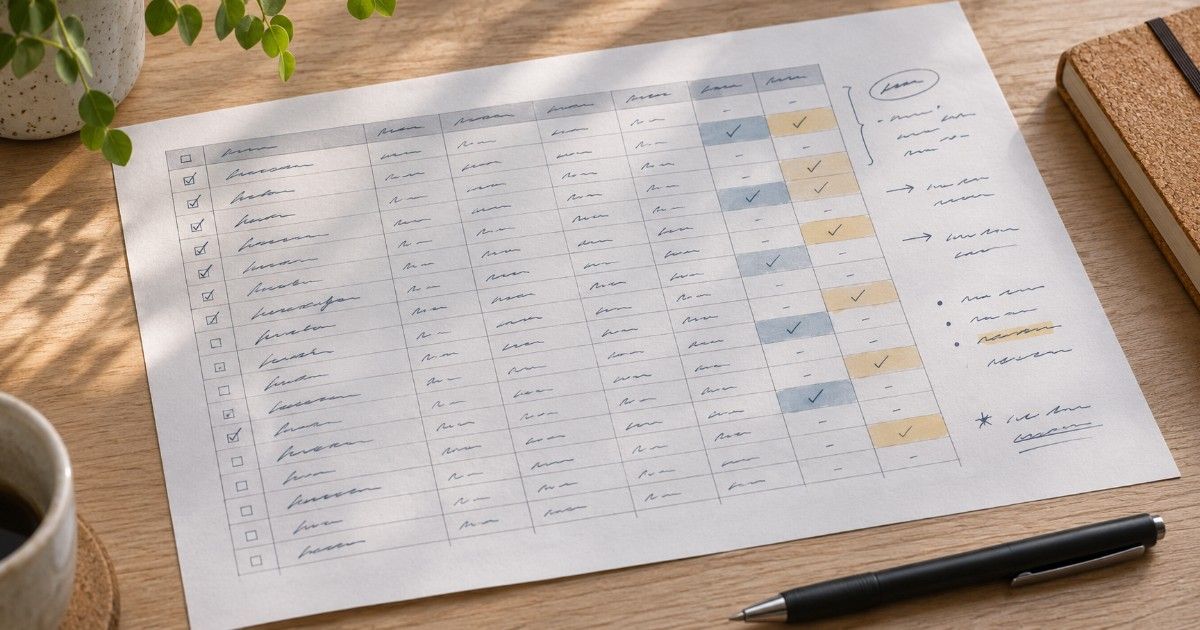
TL;DR: Add a founder-mandate column to the investor list you already use. Verify each fund’s stated focus against its published investments, then apply the same stage, sector, and check-size filters you use for every other investor.
Decision one: add a founder-mandate column to your list
Most investor lists start with sector, stage, and check size. Those fields tell you whether a fund can participate in your round. A separate column for the fund’s stated founder focus helps you spot investors you might otherwise miss.
Say you’re raising a $2.5M seed round for a fintech company. Start with funds that invest at that stage and in that sector. Look for firms with a published focus on founders like you, then add the supporting link, the date you checked it, and a note on whether the fund could lead or participate. Keep those names in the same list so you can compare them on the same terms.
 A target list is only as good as the fields it was built to filter on.
Decision two: verify the fund’s stated focus
Start with the fund’s investment thesis, application criteria, or published portfolio. Female Founders Fund describes its focus on investing in women founders. Harlem Capital describes its mission to invest in diverse founders. In both cases, check the fund’s current criteria and the kinds of companies it backs before adding it to your outreach list.
Review a sample of recent announced deals and note what the fund says about the investment. Use the fund’s statements and founders’ public self-descriptions as evidence. If the public record leaves a gap, ask the fund directly about its focus and recent activity.
Decision three: diligence the fund before you pitch
Ask when the fund last made a new investment, what stage and check size it is targeting now, whether it leads or follows, and how its stated founder focus shows up in current deals. If the conversation advances, ask to speak with a portfolio founder who raised at a similar stage. Find out how the investor behaved when the company needed help or missed a milestone.
Prepare for the same investment questions any seed investor might ask. Learn whether the partner is most interested in the team, the company’s defensibility, or evidence of traction, and lead with the strongest evidence you have for that conversation.
Decision four: match check size to the role you need filled
A pre-seed fund that typically writes $50K checks could participate in a $3M seed round. If you need a lead, spend your lead outreach on funds that can set terms and commit enough capital to anchor the round.
Apply the same screen to every fund on the list. The VEN guide to qualifying investors by check size walks through how to test that fit before you pitch.
Decision five: find an introduction with a reason behind it
A founder the fund has backed can tell you how the team invests and which partner is most relevant. If they’re comfortable introducing you, give them a short note they can forward that explains your company, round, and fit with the fund. A concise direct note can work when you can point to the fund’s thesis and explain why it fits your company.
Record why each investor fits, who could introduce you, and what the investor could contribute beyond capital. If you already have a lead, ask who they have invested alongside and would bring into the round. That’s one reason to line up a seed lead early.
Before you add a fund to your outreach list
- Can I point to the fund’s stated focus and recent investments that fit it?
- Does the fund’s typical stage and check size match this round?
- Am I asking this fund to lead or to participate?
- Do I know when the fund last made a new investment and whom I could ask for a reference?
- Can I explain why this particular partner is a fit in a short intro or direct note?
The pattern underneath
A founder-focused mandate gives you another way to find investors. Recent activity, stage, check size, and founder references tell you whether a fund belongs in this round. Keep all of that in one list so your outreach follows the same priorities.